How long does a facelift last?
“How long will my facelift last?” This is probably the most common question we receive during consultations. And it’s also one of the most difficult to answer definitively.
You often read on the internet that the results of a facelift last for 8, 10 or 15 years. In reality, however, there is no universal number. Everyone ages differently and the duration of the results is influenced by a number of factors that cannot be accurately predicted during a consultation.

A facelift doesn’t stop time.
A facelift cannot stop the natural aging process. The surgery returns loose tissues to a younger anatomical position, but the skin, subcutaneous tissue, and connective tissue structures will continue to age.
The difference is that the face does not age from its original sagging position, but from a significantly younger starting state. Even after ten years, most patients look younger than if they had never had a facelift.
Why can’t the exact number of years be determined?
During a consultation, we can assess the current condition of your skin, the quality of your soft tissues, and the extent of their decline. However, we cannot predict how your body will age in the coming years.
The long-term result is influenced by, for example:
- genetic predispositions,
- skin quality and collagen production,
- age at the time of surgery,
- smoking,
- sunlight,
- weight fluctuations,
- general health,
- lifestyle and skin care.
Therefore, two patients of the same age who undergo the same surgery may look completely different ten years later.
The chosen surgical technique is also important.
The duration of the result is influenced not only by the patient’s body, but also by the facelift method itself.
Older techniques worked mainly on the skin. The skin was turned off, but the deeper facial structures remained almost unchanged. As a result, the results were not as long-lasting and sometimes looked less natural.
Modern methods, especially Deep Plane facelift, work with the deep anatomical layers of the face and address the very cause of tissue sagging. As a result, the results are more natural, more stable and usually longer-lasting.
Is it better to undergo a facelift earlier?
In most cases, yes.
If the patient comes in at a time when the signs of aging are moderately pronounced, the skin tends to be more elastic and the tissues retain better quality. This allows the surgeon to achieve a very natural result that often maintains its effect for a longer period of time.
However, this does not mean that there is an ideal age for a facelift. Much more important than the number on your ID card is the biological condition of the face and the extent of age-related changes.
Does ten years automatically mean another facelift?
Definitely not.
Some patients will never undergo another surgery. Others, after ten or more years, decide to have a second facelift or just a minor correction. Here it is worth considering other options for skin care. Non-invasive aesthetic dermatology procedures can also prolong the effect of rejuvenation.
If a second facelift is performed, it does not mean that the first surgery “stopped working.” It only means that the natural aging process has continued.
What can you do to get the best results in the long term?
Although we cannot influence genetics, many other factors are in our hands.
The following mainly contribute to the long-term result:
- No smoking,
- protect the skin from UV radiation,
- maintain a stable weight,
- take care of the quality of the skin,
- maintain a healthy lifestyle.
You might also be interested in

What are the facelift methods? Differences between mini facelift, SMAS and Deep Plane facelift
Facelift is one of the most effective surgical methods of facial rejuvenation. However, individual techniques differ significantly not only in the scope of the operation, but also in the anatomical layers they work with and the results they are able to achieve. The fundamental difference is not just the size of the incision or the … Continued
Read more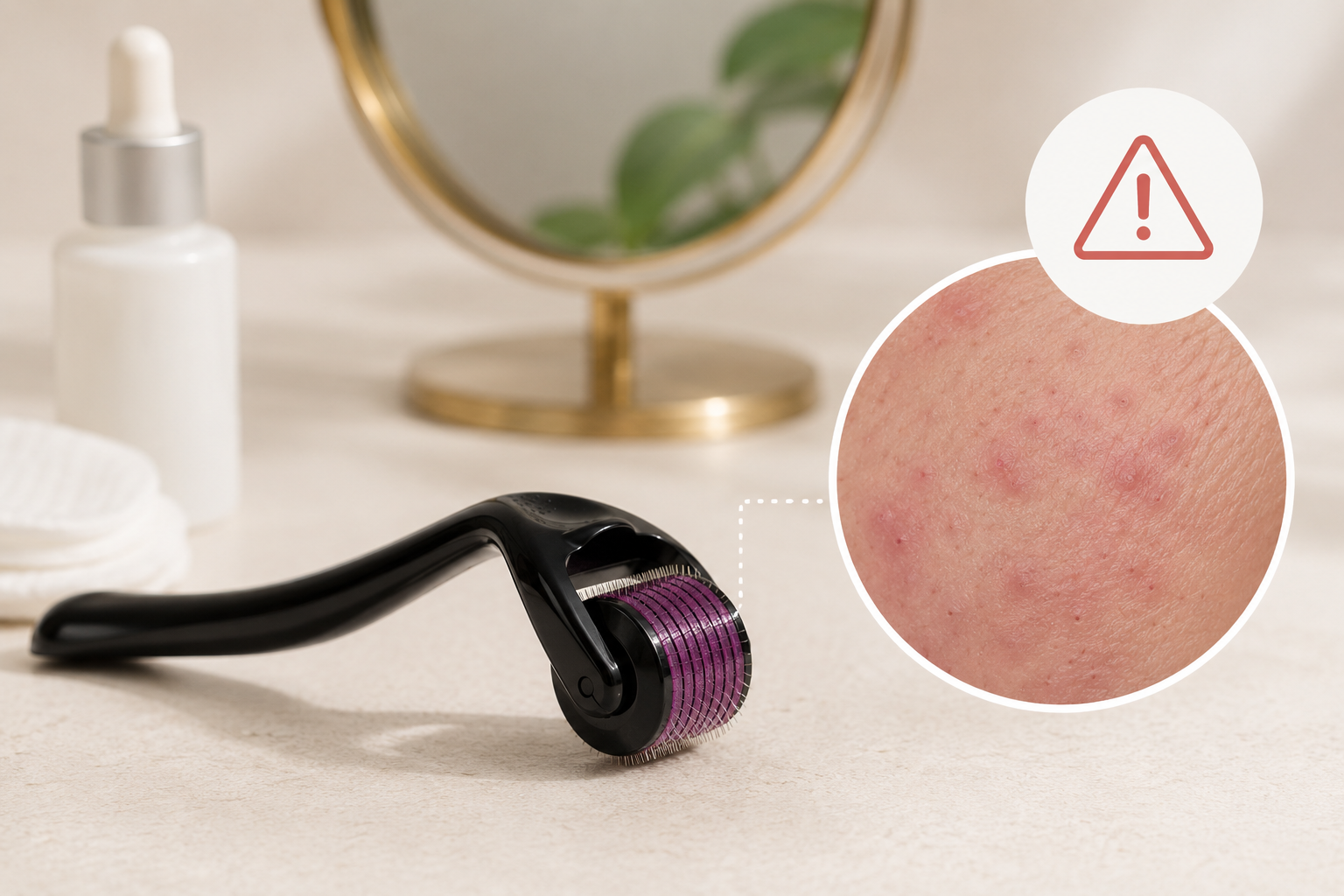
Home dermaroller: why can it do more harm than good to the skin?
On social media, the homemade dermaroller appears as a simple tool that promises smoother skin, smaller pores, reduced acne scars, and better absorption of cosmetics. With just a few swipes across the face, the skin is said to start producing collagen intensively. In reality, however, microneedling is a much more sophisticated method. What works as a precisely controlled stimulation … Continued
Read more
How to get rid of a double chin? From exercise to liposuction to a deep neck lift
A double chin is one of the most common aesthetic problems that can change the overall expression of the face. It can visually add years, disrupt the sharp jawline, and make the face appear tired or heavier. However, it is far from only affecting overweight people – it is often caused by genetics, anatomical disposition, … Continued
Read more